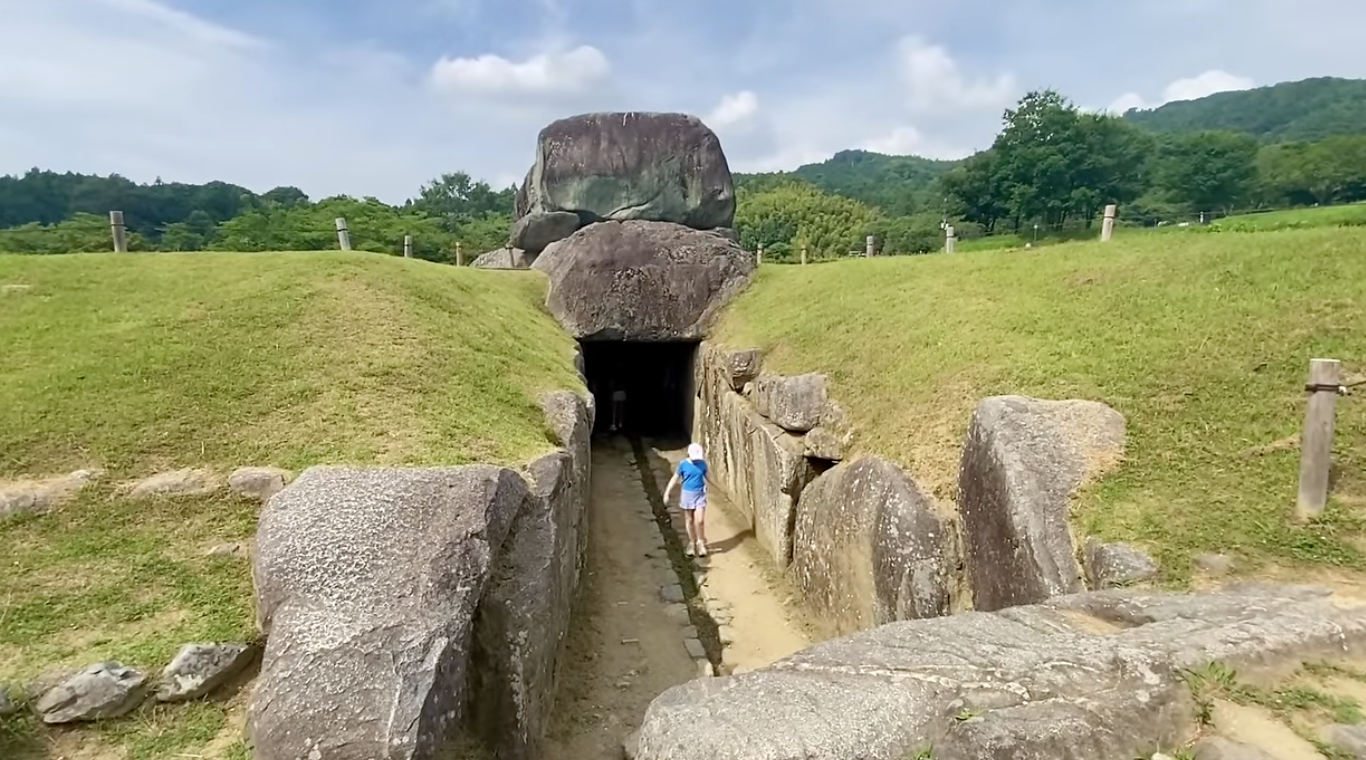
Nestled in the peaceful village of Asuka, within Japan’s Nara Prefecture, lies one of the most significant archaeological sites in the country: the Ishibutai Kofun. This massive megalithic tomb, dating back to the 7th century, offers a window into the Asuka period—the dawn of the Japanese state.
The Subject Matter: Ishibutai Megalithic Tomb
The video begins by showcasing the sheer scale of the Ishibutai Kofun megaliths [00:15]. The name “Ishibutai” literally translates to “Stone Stage,” a moniker earned due to the flat top of the structure which resembles a platform.
Key Facts about the Tomb:
- Historical Significance: It is believed to be the burial site of Soga no Umako, a powerful political figure who played a crucial role in the introduction of Buddhism to Japan.
- Construction: The tomb originally consisted of a large earthen mound, but erosion over centuries has exposed the massive stone burial chamber.
- Scale: The structure is composed of roughly 30 massive granite rocks. The total weight of the stones is estimated to be around 2,300 tonnes, with the largest ceiling stone weighing approximately 77 tonnes alone [01:45].
- Access: Visitors can actually enter the hollowed-out burial chamber, experiencing the cool, damp atmosphere and the precision with which these ancient stones were placed [02:10].
The Location: Asuka, Nara
Asuka is often referred to as the “cradle of Japanese spirit.” It was the site of Japan’s first permanent capital before Nara (Heijo-kyo).
The video captures the transition from the historical monuments to the lush, rural beauty of the Nara countryside [03:30]. Unlike the bustling urban centres of Tokyo or Osaka, Asuka provides a serene landscape defined by terraced rice paddies, traditional architecture, and winding mountain paths.
Exploring the Secret Waterfall
Beyond the megaliths, the exploration continues into the dense forests surrounding the village. The journey toward the “Secret Waterfall” [04:20] highlights the natural Shinto aesthetic—where nature itself is considered sacred.
Nature and Terrain:
- Flora: The path is lined with native Japanese flora, including vibrant mosses and ancient cedar trees.
- The Waterfall: Reaching the waterfall reveals a secluded spot rarely visited by mainstream tourists [05:45]. In Japanese culture, waterfalls are often sites for Misogi (purification rituals), and the one featured in the video embodies that sense of untouched tranquillity.
Why Visit Ishibutai and Asuka?
- Archaeological Wonder: Seeing 77-tonne stones placed with such accuracy in the 600s is a testament to ancient engineering.
- Cultural Depth: It is the best place to understand the transition from the Kofun period to the Asuka period.
- Hiking and Nature: The area offers some of the best walking and cycling trails in Nara, blending history with outdoor exercise.
Travel Logistics
- Getting There: Asuka is easily accessible via the Kintetsu Railway from Nara City or Osaka. From Asuka Station, many visitors rent bicycles to navigate the scattered archaeological sites. That said driving a hire car is easiest and most convenient.
- Best Time to Visit: Spring (for cherry blossoms surrounding the tomb) or Autumn (for the brilliant red maples along the forest trails) are highly recommended.
The On The Pins exploration concludes by reminding viewers that Japan’s history isn’t just in its museums, but in the massive stones and hidden waterfalls of its ancient heartland [06:30].