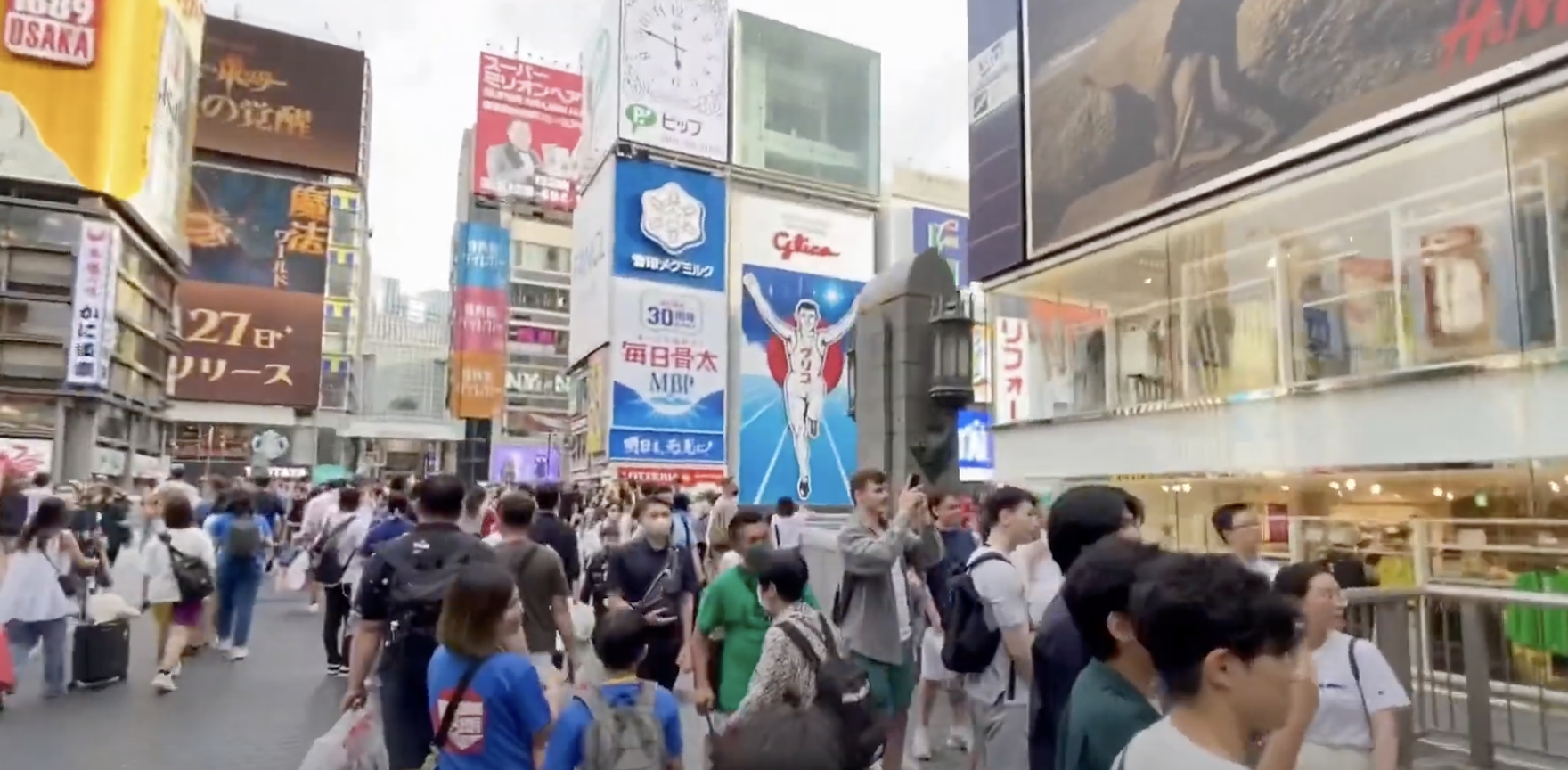
Forget everything you think you know about the quiet, reserved soul of Japan. Forget the silent temples and the Zen gardens. There is another Japan, a wilder beast with a ravenous appetite and a heart that beats to the rhythm of a frantic drum machine. This is Osaka, the nation’s glorious, unapologetic id, and if you want to plug directly into its high-voltage mainframe, there’s only one place to go: Dotonbori.
This isn’t a street; it’s a sensory assault. It’s a roaring, luminous river of humanity, food, and beautiful madness that cuts through the Namba district. To come here is not merely to sightsee; it’s to surrender your senses to a glorious, electric overload. This is the Japan that stays up late, eats with joyous abandon, and lights up the night with a defiant, neon grin.
A Cathedral of Light and the Running Man
By day, Dotonbori is a chaotic thrum of shoppers, tourists, and delivery scooters weaving through the narrow backstreets. But when the sun goes down, the real ritual begins. One by one, the gods of this place awaken, not in shrines, but on the sides of buildings. This is a city that worships at the altar of the billboard, and the Ebisu Bridge becomes the main pew in a cathedral of light.
Towering over it all is the patron saint of Dotonbori: the Glico Running Man. He’s been sprinting across his digital finish line since 1935, a perpetual symbol of victory and energy, his arms raised in triumph over the canal below. To stand on that bridge, surrounded by a dizzying panorama of flashing, strobing, and glowing advertisements for everything from beer to bewilderingly specific pharmaceuticals, is to witness a spectacle of pure, uncut commercial poetry. The canal becomes a mirror, shattering the neon into a million shimmering pieces, while tourist boats glide through the liquid light show like spectral gondolas. It’s a beautiful, disorienting fever dream.
The Sacred Law of Kuidaore
In Osaka, there is a sacred creed known as kuidaore—to eat until you drop. Dotonbori is its holiest site. The air itself is a thick, intoxicating stew, heavy with the scent of sizzling batter, grilled seafood, and sweet soy glaze. You follow your nose down crowded alleyways where every doorway promises a new kind of culinary delirium.
Giant, almost menacing mascots loom over you: a mechanical crab with waving claws, a ferocious dragon, an enormous pufferfish lantern. These aren’t just decorations; they’re challenges. They beckon you into a world of takoyaki (octopus balls) so hot they’ll scald the roof of your mouth, savory okonomiyaki pancakes cooked on massive griddles, and impossibly rich bowls of ramen served in tiny, steamy shops. You can even find the bizarre spectacle of an indoor fishing restaurant, where you catch your own dinner from a murky pool before it’s whisked away to be cooked. This is not a place for timid appetites. You come here to feast, to point at something strange and wonderful on a menu, and to eat with both hands.
The Human Current
To truly understand Dotonbori, you have to throw yourself into the current. The main thoroughfare is a river of people, a chaotic but strangely harmonious flow of tourists, locals, teenagers in the latest street fashion, and businesspeople loosening their ties. A beatboxer lays down a rhythm on a street corner, drawing a crowd that claps and moves as one. Tour groups in matching t-shirts pose for a thousand simultaneous photos. It’s a snapshot of humanity at its most vibrant and alive.
The real magic, however, lies in the tributaries—the narrow side streets that branch off from the main canal. Here, the roar of the crowd softens to a murmur, and the neon glare is replaced by the warm glow of paper lanterns. You’ll find tiny, hidden bars, smoky yakitori joints with only a handful of seats, and shops selling everything from vintage clothes to kitchen knives sharp enough to split an atom. To get lost in this labyrinth is to find the real pulse of the city.
Dotonbori is a beautiful, glorious monster. It’s a full-frontal assault on your senses that leaves you breathless, overstimulated, and hungry for more. It’s the wild, untamed spirit of Osaka, served up hot, fresh, and glowing in the dark.