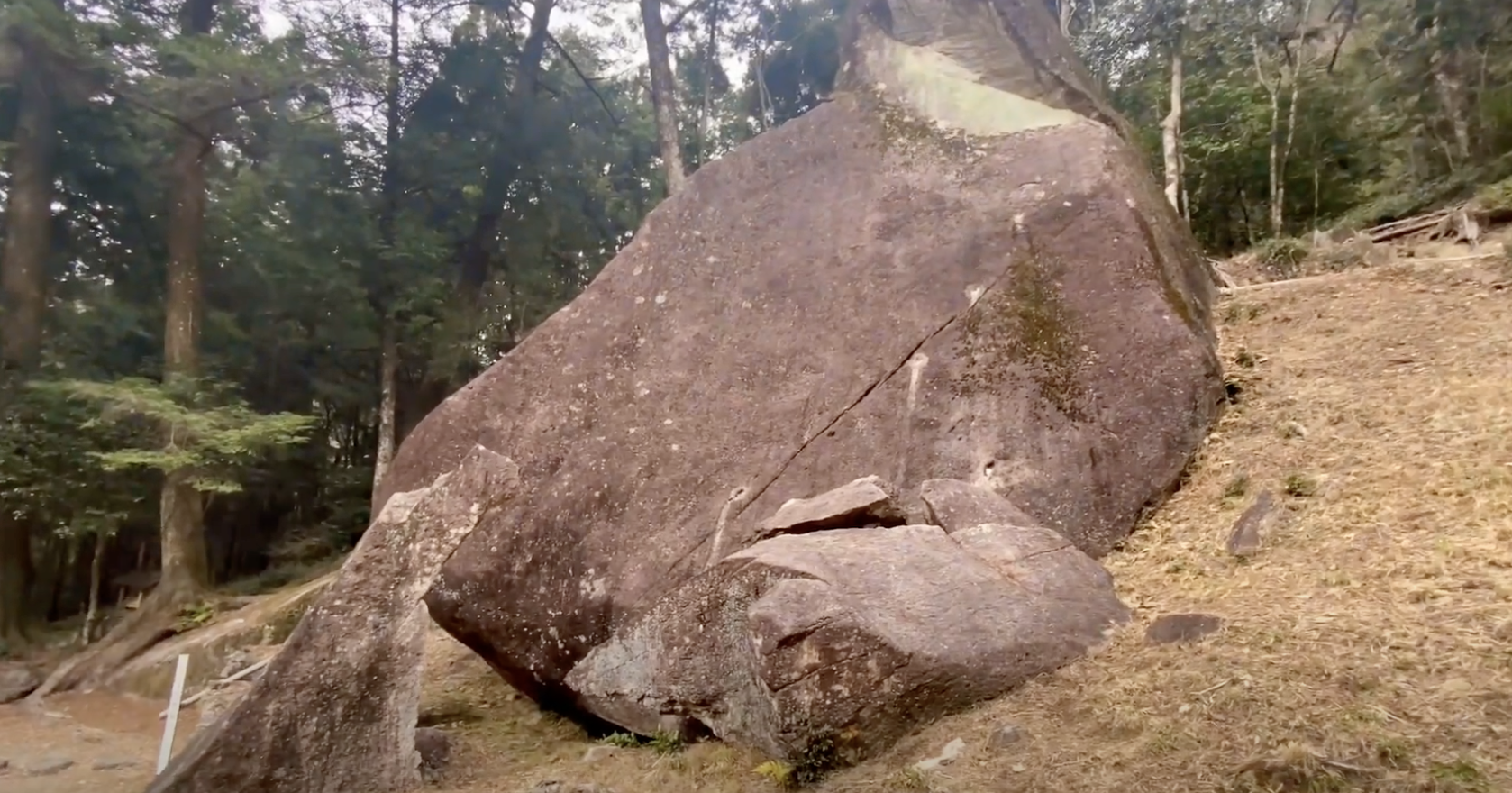
Keep it quiet. Japan is more than Tokyo, Kyoto and Osaka… There are freaking megaliths.
The neon jungle of Tokyo and the serene temples of Kyoto have their place, I suppose. They’re the polished, polite, postcard version of Japan sold to the masses. But if you’re like me, you crave something with more teeth, something raw and unsettling that whispers of a time before shoguns and samurai. You want to peel back the slick veneer of modern Japan and touch the chaotic, beating heart of its ancient past.
Forget the Golden Route. We’re going on a different kind of pilgrimage, a hunt for the forgotten giants of stone that lie sleeping in the hills and forests, far from the tourist hordes. We’re talking about the megaliths, the colossal stone enigmas that the guidebooks conveniently ignore. These are places of raw power, of baffling mystery, and they offer a trip far more potent than any sake bomb.
So, buckle up. We’re leaving the well-trodden path and diving headfirst into the weird, wild world of ancient Japan.
A Note on Travel: Ditch the Train, Get a Car
Let’s get one thing straight. You can’t conquer this trifecta of stone-cold weirdness by relying on the Japan Rail Pass alone. These monuments were not built for commuter convenience. They are tucked away in rural Nara and the mountains of Gifu. To truly do this trip justice and move at your own pace, you need a car. Renting a car in Japan is straightforward for most tourists with an International Driving Permit. It grants you the freedom to chase the sun, get lost on mountain roads, and find the hidden corners the tour buses will never see. The drive from the Asuka sites in Nara to Kanayama in Gifu is a journey in itself, taking you through the heart of the country.
The Titans of Asuka: Where Japan’s History Gets Heavy
Our first stop is Asuka, a quiet village in Nara Prefecture that was once the cradle of Japanese civilization. Most tourists bypass it, which is a damn fine thing. It leaves the real treasures for us. This place is lousy with ancient power, and its megalithic monsters are the main event. While you can technically reach the Asuka area by train and then use local buses or rental bikes, having your own vehicle makes hopping between these spread-out sites infinitely easier.
Ishibutai Kofun: The Stone Stage for a Dead Chief
You can’t miss Ishibutai Kofun. It’s a 2,300-ton beast of granite squatting in a field, a tomb so powerful its earthen shroud has long since disintegrated, leaving its colossal stone guts exposed to the sky. They call it the “Stone Stage” because the top is flat, but that name feels too quaint, too theatrical. This was no stage; this was a statement of raw power, believed to be the final resting place of Soga no Umako, a notoriously influential clan leader from the 6th century.
Walking into the burial chamber is a humbling experience. Thirty massive stones, some weighing over 77 tons, form a cavern of eternal silence. The sheer scale is staggering, a testament to the incredible engineering prowess of the Asuka people. You can feel the weight of history, the silent echo of a forgotten era. It’s a place that reminds you of your own fleeting existence in the grand, brutal sweep of time. Legend has it the tomb was stripped of its earthen mound as a posthumous punishment for the Soga clan’s arrogance. Standing before it, you get the sense that Soga no Umako wouldn’t have had it any other way.
Masuda no Iwafune: The 800-Ton Enigma in the Woods
A short drive and a sweaty hike up a forested hill from Asuka village leads to something truly bizarre: the Masuda no Iwafune, or the “Rock Ship of Masuda.”And let me tell you, this thing is a full-blown, 800-ton granite “what the hell?”It’s a massive carved stone, roughly 36 feet long and 15 feet high, with a flattened top and two perfectly square holes carved into its surface.
The academics are still scratching their heads over this one. Theories fly around like drunken moths. Is it an unfinished tomb entrance? A monument to a long-gone lake? Or, as the most compelling theory suggests, an ancient astronomical observation point? The ridge line on its back aligns with the sunset on a specific day of the old lunar calendar, a crucial marker for ancient agriculture.
But theories are just that. When you’re standing there, sweating in the quiet woods, the rock feels less like a scientific puzzle and more like a piece of alien hardware left behind after a hasty departure. The precision of the cuts in the hard granite is baffling, a technical marvel that seems to defy the tools of the Kofun period. It’s a magnificent, maddening mystery, easily reached with a short walk from a nearby road.
Iwaya-Iwakage of Kanayama: Japan’s Jomon-Era Stonehenge
Leaving the relative civilization of Asuka, we head for the mountains of Gifu Prefecture, a drive that underscores the remoteness of our next destination. Here, nestled in a quiet forest a 30-minute drive from the hot spring town of Gero, you’ll find the Kanayama Megaliths. This complex makes you question everything you thought you knew about prehistoric Japan. The main attraction is the Iwaya-Iwakage, a site that could be Japan’s answer to Stonehenge.
This isn’t a tomb. This is a machine. Comprised of three immense megaliths leaning against each other to form a cavern, Iwaya-Iwakage is believed to be a sophisticated solar observatory. Researchers claim that for thousands of years, this setup has been used to track the solstices and equinoxes and even identify leap years with a precision that rivals our modern Gregorian calendar.
Inside the cavern, which houses a small, ancient shrine, archaeologists have found Jomon-period pottery and arrowheads, suggesting this site has been a place of human significance for thousands of years, possibly as far back as 8,000 years ago. This predates the pyramids. Standing inside, watching the light shift through the cracks, you feel a connection to something primal, a time when humanity’s survival was tied to the rhythm of the sun and stars.
The Verdict: Why You Must Hunt for These Stone Giants
So why should you ditch the crowded temples and hunt down these forgotten megaliths? Because here, in the quiet, moss-covered corners of Japan, you’ll find a story that is raw, unfiltered, and deeply human. These stones are not just tourist attractions; they are monuments to the ambition, ingenuity, and cosmic curiosity of a lost world.
They are a reminder that history is not always neat and tidy. It’s often a baffling, contradictory, and glorious mess. Visiting Ishibutai, Masuda no Iwafune, and Iwaya-Iwakage is more than just a sightseeing trip; it’s a journey into the heart of a mystery, a chance to touch a past that is both profoundly strange and startlingly familiar.
So get yourself an International Driving Permit, rent a car, grab a map, and get a little lost. The stone giants are waiting. And they have stories to tell.