There’s a sickness spreading across the globe, a plague of loud shorts and cheap beer, and it seems to have found its latest patient in the sacred heart of Japan. I’ve seen what my kind—the sunburned hordes from the West, the Aussies, the Yanks, the Brits—did to Bali. They descended like locusts, turning a spiritual paradise into a theme park for their own vapid self-discovery. Now, they’ve set their sights on Kyoto, and I swear to God, you can hear the soul of the city groaning under the weight of it all.
Why do we travel so badly? Is there some-deep seated colonial impulse to conquer, consume, and discard? I don’t have the answers, but I pray they don’t destroy this place. So listen up. If you’re coming here, come with respect. Be kind. Bow your head to the local customs. Or, for the love of all that is holy, stay home and watch it on a screen. Don’t be the one who kills the magic.
The Belly of the Beast: Nishiki Market
If you want to take the pulse of this city, you start in its gut. And in Kyoto, the gut is the Nishiki Market. They call it “Kyoto’s Kitchen,” a 400-year-old covered alleyway that throbs with a raw, primal energy. It’s a glorious, claustrophobic assault on the senses. The air is thick with the smell of grilling eel, soy sauce, and a thousand things you can’t identify.
Forget your sterile supermarkets. This is where life happens. Vendors who’ve been here for generations stand over beds of ice piled high with glistening sea creatures, some still twitching. They’ll shuck you a fresh oyster right there on the street, a briny shot of the ocean that’ll jolt you awake faster than any triple espresso. And the beef… my God, the beef. Skewers of Kobe and other prime wagyu sizzle over open flames, the fat rendering down into a buttery, decadent essence that drips onto the coals and sends up plumes of intoxicating smoke. This isn’t just food; it’s a sacrament. It’s the fuel you need for the madness that awaits outside the market’s narrow confines.
The Geisha Hunt in Gion
Spilling out of the market, you inevitably find yourself drawn into the Gion district, the city’s famed geisha quarter. This is the Kyoto of your imagination, a labyrinth of narrow stone-paved streets lined with dark, latticed machiya—traditional wooden townhouses. The air here is different, heavy with history and secrets whispered behind sliding paper screens.
But the quiet dignity of Gion is under constant attack. It has become a hunting ground. Packs of tourists, cameras at the ready, stalk the alleyways, waiting for a geisha or a maiko (apprentice geisha) to flit between tea houses. When one appears, it’s a frenzy. A grotesque paparazzi scrum descends on these women, who are not tourist attractions, but artists upholding a centuries-old tradition. It’s a shameful spectacle.
Meanwhile, the true beasts of burden in this twisted safari are the rickshaw pullers. Young, impossibly fit men, they haul tourists through the streets with a stoic grace, their quiet strength a stark contrast to the giggling chaos in the carriage behind them. They are the silent engine of this beautiful, broken machine.
The Holy Mountain: A Climb to Kiyomizu-dera
To escape the madness, you have to go up. The path to Kiyomizu-dera, the “Pure Water Temple,” is a steep ascent through the preserved streets of Sannenzaka and Ninenzaka. The climb is a trial in itself, a gauntlet of consumerism designed to test your soul. Every ancient building seems to house a shop selling cheap souvenirs, cloyingly sweet matcha ice cream, or rental kimonos that turn tourists into walking caricatures.
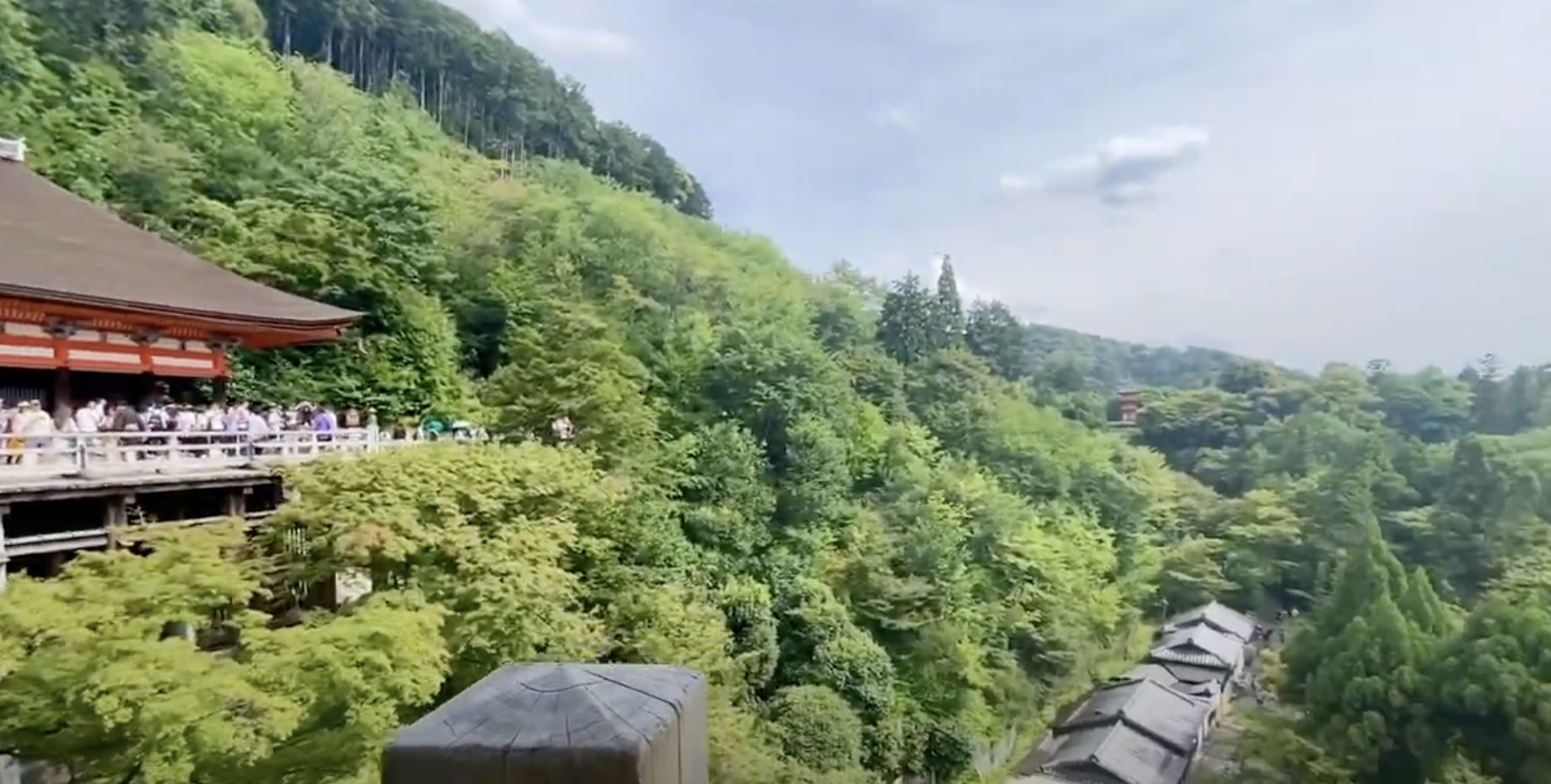
But then, you arrive. Perched on the side of the Otowa mountain, Kiyomizu-dera is a true wonder. Its massive main hall and wooden stage were built entirely without nails, a testament to an insane level of craftsmanship. From that stage, the entire city of Kyoto spreads out below you, a sprawling grey sea hemmed in by green mountains. For a moment, you can breathe. You can see the whole beautiful, sprawling, complicated mess of it all from a safe distance.
Below the main hall, you’ll find the Otowa Waterfall, where three separate streams of water fall into a pond. Crowds line up for a chance to drink from them, using long-handled cups to catch the sacred water, which is said to grant health, longevity, and success in studies. It’s a rush for a quick spiritual fix, a final, desperate sip of purity before descending back into the chaos.
Kyoto is a fragile dream. It’s a city teetering on the edge between timeless beauty and a tourist-trampled grave. It’s in the quiet gardens behind ancient walls, in the silent nod of a shopkeeper, and in the cool evening breeze along the Kamo River. Come here, by all means. But tread lightly. Listen more than you speak. Observe more than you photograph. Find its quiet heart and protect it. Because once it’s gone, it’s gone forever.